|
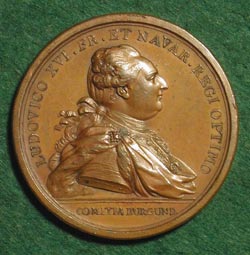
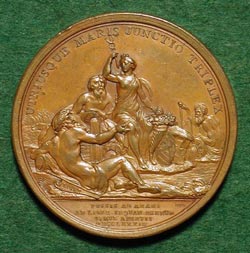
CANAL OF BURGUNDY DUVIVIER, Benjamin: France, 1783, Bronze, 50 mm For a brief biographical sketch of Louis XVI see the medal ‘CORONATION OF LOUIS XVI AT RHEIMS’. The Canal of Burgundy (French: Canal de Bourgogne) is located in central eastern France and follows the valley of the Armancon. The main purpose of the canal was to connect the Atlantic Ocean to the Mediterranean Sea. This was accomplished by joining the rivers Yonne and Saône. The Yonne joins the Seine, which empties into the English Channel in the north, and the Saône joins the Rhône, which empties into the Mediterranean Sea in the south. The history of the canal is long and complicated, the first designs dating from the 17th century. Its actual construction began in 1727 and was completed in 1832. At the beginning of the reign of Louis XVI in 1765, major construction of the Burgundy canal began on the side of the Yonne working upstream towards the town of Tonnerre, and a few years later work began on the Saône side towards Dijon. A significant portion of the canal was opened in 1783, the event commemorated by this medal. Other portions of the canal were completed as funds allowed. The final part of the construction of the Burgundy canal was the complicated and impressive tunnel, which is at the summit. The building of the tunnel began in 1826 and was completed in 1832, making the final Canal of Burgundy about 240 km in length and having a total of 209 locks. LINK to Canal of Burgundy |
|